
How this article was made
| Mode | “Write an article (with sections)” |
|---|---|
| AI model | StepFun Step 5 (free, via NVIDIA) |
| Topic and keywords | How to Grow Vegetables on a Balcony: A Practical Guide for Beginners · balcony vegetable garden, container gardening, growing tomatoes in pots, small space gardening |
| Style | friendly and practical, like advice from an experienced urban gardener |
| Images | ClipCloud, style “photorealistic-1” |
| Comments | 3 comments requested |
| Length | 8,137 characters (the settings asked for 7,000 to 9,000) |
A balcony can grow real food if you match the right crops to your space. This guide skips the theory and shows you how to read your light, pick containers that drain well, and keep plants fed so you actually harvest something.
You will learn which vegetables do best in pots, how to grow tomatoes without frustration, and how to water and replant so the harvest keeps coming. Start small, watch what works, and enjoy picking dinner a few steps from your kitchen.
Assessing Sunlight, Wind, and Space for a Balcony Vegetable Garden
Spend a week watching your balcony before buying seeds. Sunlight comes first. Most vegetables need six to eight hours of direct sun, so track the light from morning to evening. South-facing balconies get the most, while north-facing ones are often too shady for tomatoes or peppers. East-facing spots catch gentle morning sun, good for leafy greens and herbs. West-facing balconies get intense afternoon heat, so expect to water more.
Wind is the quiet killer of balcony gardens. Upper floors and open railings create gusts that dry soil and snap stems. If your balcony is breezy, group containers together to form a microclimate, or set taller plants on the windward side to shelter delicate crops. A simple burlap or lattice windbreak helps a lot.
Measure your space honestly and think vertically. Railing planters, wall pockets, and stackable towers multiply your growing area without crowding. Check building weight limits too; big ceramic pots full of wet soil get heavy fast. Lightweight resin or fabric pots are easier to move and safer for floors.
A quick guide:
| Sunlight | Best crops |
|---|---|
| 6+ hours | Tomatoes, peppers, beans |
| 3-6 hours | Lettuce, spinach, herbs |
Start with what you have. A small, well-used balcony beats a large, neglected one every time.
Container Gardening Basics: Pots and Potting Mix
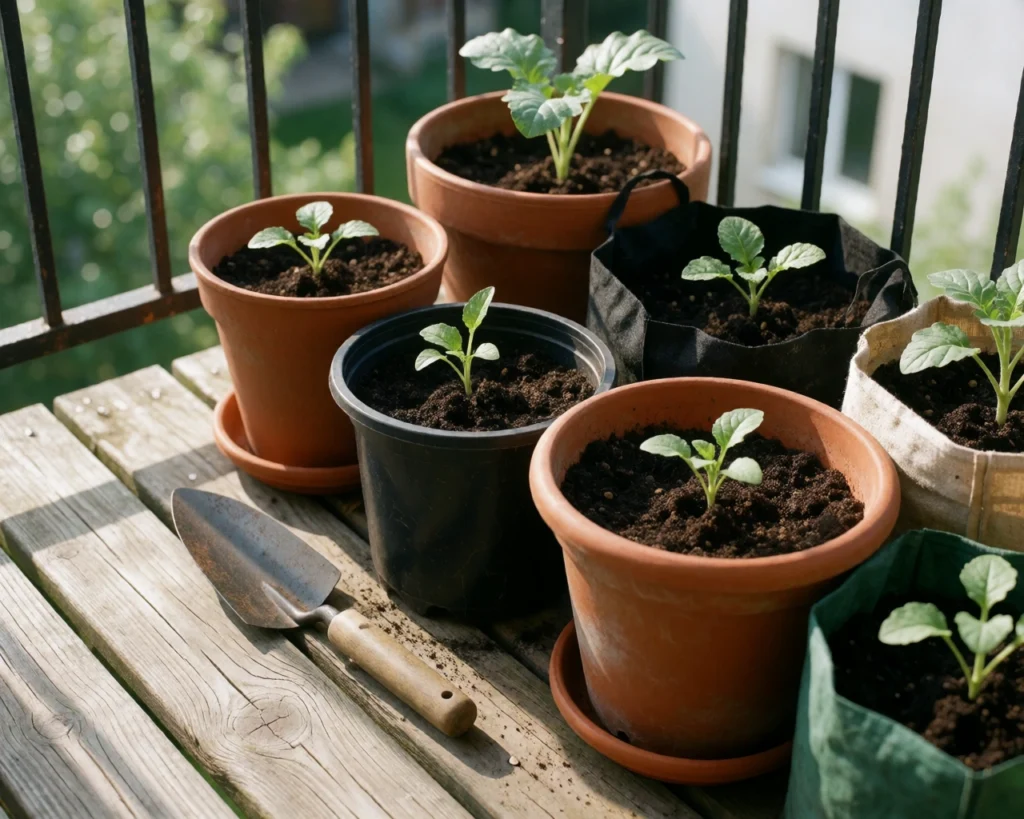
Pick a container with drainage holes, because roots left sitting in water rot. For most balcony vegetables, use pots at least 8 to 12 inches deep. Leafy greens and herbs manage in 6-inch pots, while tomatoes and peppers need 5-gallon buckets or larger. Plastic holds moisture longer, terracotta dries out fast, and fabric pots are light but thirsty.
Fill pots with a bagged potting mix, not soil dug from the ground. Garden soil compacts in containers and drains poorly, which suffocates roots. A good mix contains peat moss or coconut coir, pine bark, and perlite for airflow. Stir in about 20 percent compost to feed plants for the first month. Quality potting soils already have good structure, so skip extra mineral additives unless the bag feels heavy and dense when you lift it. If you reuse old pots, scrub them with soapy water first to remove salt buildup and pests.
Match the container to the crop so you do not repot later:
| Vegetable | Minimum pot size |
|---|---|
| Lettuce, spinach, herbs | 6 inches deep |
| Radishes, bush beans | 8 inches deep |
| Tomatoes, peppers, eggplant | 5 gallons per plant |
Water the mix until it drains from the bottom, then let the pot settle for an hour before planting. Dry potting mix repels water at first, and this step prevents dry pockets where roots sit.
Best Vegetables for Small Space Gardening
Start with crops that produce a lot from a small footprint. Leafy greens are the easiest win: lettuce, arugula, spinach, and kale grow fast and keep producing when you cut outer leaves. Radishes and green onions finish in weeks and work well as quick fillers. Cherry tomatoes outperform big slicing types in pots because they ripen quickly and patio varieties stay compact. Bush beans, peppers, and herbs also earn their space.
| Vegetable | Why it works | Quick note |
|---|---|---|
| Lettuce, arugula, spinach | Fast, repeat harvests | Sow small batches every 2 to 3 weeks |
| Radishes, green onions | Ready in 3 to 5 weeks | Thin seedlings early |
| Cherry tomatoes | Heavy yield, compact plant | Choose patio or determinate types |
| Bush beans | No support needed | Pick often to keep them producing |
| Basil, parsley, chives | Small pots, frequent snipping | Pinch flowers to keep leaves tender |
Plant what you actually eat, and give every container a job. Skip long-season crops unless they are favorites. Save floor space by training a compact vining cucumber or a small trailing squash up a railing or stake instead of letting it sprawl.
Mix fast and slow crops together. Radishes can grow beside young tomatoes, then be replaced with lettuce after harvest. That keeps pots full and gives you steady picking through the season.
Practical Tips for Growing Tomatoes in Pots
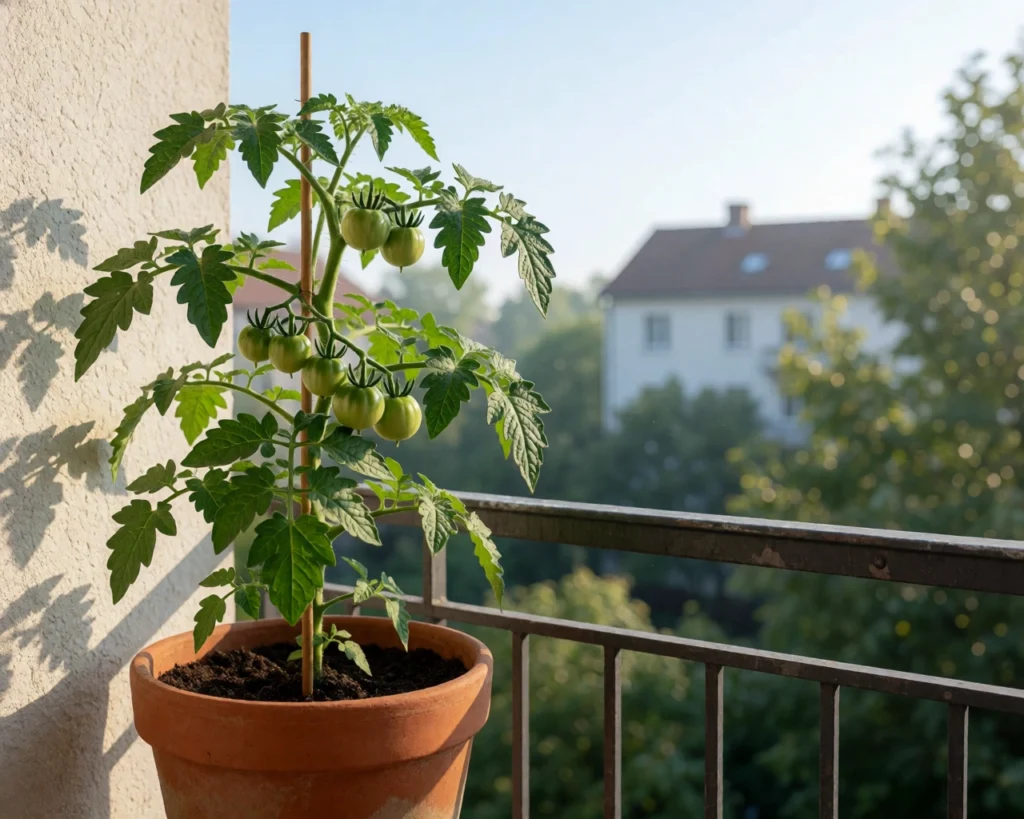
Tomatoes are the stars of most balcony gardens, but they need more attention than herbs or lettuce. Pick the right type: determinate varieties stay bushy and fruit in a concentrated window, which suits pots. Indeterminate types keep growing and need steady pruning plus a tall support.
Plant deep. Pinch off the lower leaves and bury two-thirds of the stem. Roots will grow along the buried section and anchor a stronger plant.
Add a cage or stake at planting time. Waiting risks slicing through roots once the plant is established. Tie the main stem loosely with soft cloth as it grows.
- Water consistently. Dry spells followed by heavy watering cause cracked fruit and blossom end rot. Check pots daily in summer.
- Feed every two weeks once flowers appear. Choose a fertilizer lower in nitrogen and higher in phosphorus and potassium.
- Shake the plant gently each morning if your balcony is sheltered: still air moves little pollen.
- Mulch the surface with straw to keep moisture steady and soil from splashing onto leaves.
- Snap off suckers (the shoots that appear where a branch meets the main stem) on indeterminate plants.
- Remove bottom leaves so foliage does not touch soil, which lowers the risk of blight.
Harvest when the fruit is fully colored and gives slightly when pressed. If birds or pests keep getting to them first, pick at the breaker stage, when color first shows, and finish ripening on a windowsill.
Watering, Feeding, and Maintaining Container Crops
Balcony containers dry out from the top and sides, so check each pot daily in warm weather. If the top inch of mix is dry, water until it runs from the drainage holes, then empty the saucer. Morning watering helps roots take up moisture before heat and wind pull it away. Small pots may need water twice daily in a heat wave; larger containers hold moisture longer. Wilting at midday often recovers by evening, but drooping after a thorough soak can mean soggy roots.
Potting mix holds limited nutrients, so mix in a slow-release fertilizer at planting and add a balanced liquid feed every two to three weeks during active growth. Once flowers appear, switch to a feed higher in potassium for fruiting. Follow the label rate, since excess fertilizer burns roots and can produce leafy plants with little harvest.
- Remove yellow or damaged leaves and check leaf undersides for pests.
- Refresh sunken pots with fresh mix, but do not bury stems deeper than before (tomatoes are the exception).
| Sign | Fix |
|---|---|
| Mix pulls away from pot edges | Soak well; repot if roots circle the base |
| Yellow leaves with wet mix | Let it dry slightly and clear drainage holes |
| Flowers drop without fruit | Water evenly and shake plants daily; heat waves also cause drop |
Harvesting and Succession Planting Through the Season
Pick vegetables at their peak and plants keep producing. Herbs, beans, and peppers need regular cutting to stay productive. Once a plant sets seed, its job is done, so harvest young and often. Snip herbs just above a leaf joint to encourage bushy regrowth. Ripe tomatoes come off with a slight twist, and cherry types often need picking every day or two.
Succession planting keeps your balcony producing from spring to fall. Instead of sowing everything at once, start small batches every two to three weeks. This gives you a steady supply of salad greens instead of one large harvest that bolts all at once. As soon as one crop finishes, fill the empty pot with the next. After early spring spinach or radishes, try bush beans or cherry tomatoes for summer. When heat-loving crops fade in late summer, sow kale, spinach, or arugula for autumn picking.
Keep a simple schedule so you always know what is coming next:
| Season | Harvest | Sow next |
|---|---|---|
| Late spring | Radishes, lettuce | Beans, cucumbers |
| Summer | Tomatoes, peppers | Kale, spinach |
| Autumn | Greens, herbs | Garlic, chard |
Clean out spent plants right away to avoid pests and disease. A quick harvest and a fresh sowing every few weeks keep a small balcony producing all season long.
This text was generated by ClipAI and the pictures by ClipCloud, to show how the programs work. Pages without this note are written by people.
 English
 RU_RU
Marcus ·
I followed the advice to plant tomatoes deep and bury two-thirds of the stem. My patio cherry tomato is much sturdier than last year's and is already fruiting. Also started shaking it gently each morning like the article suggested. Simple tips that actually work.
Elena ·
I disagree that north-facing balconies are too shady for tomatoes or peppers. Mine gets strong reflected light off the apartment wall opposite, and my cherry tomato produced all summer in a 5-gallon bucket. Light quality varies more than the article suggests.
Sarah ·
I have a west-facing balcony and the article says afternoon heat means more watering. Last year my lettuce and basil dried out despite daily checks. Do you recommend self-watering containers, or is there a better way to manage moisture in plastic pots?