
The early years of mobile communications: from bricks to flip phones
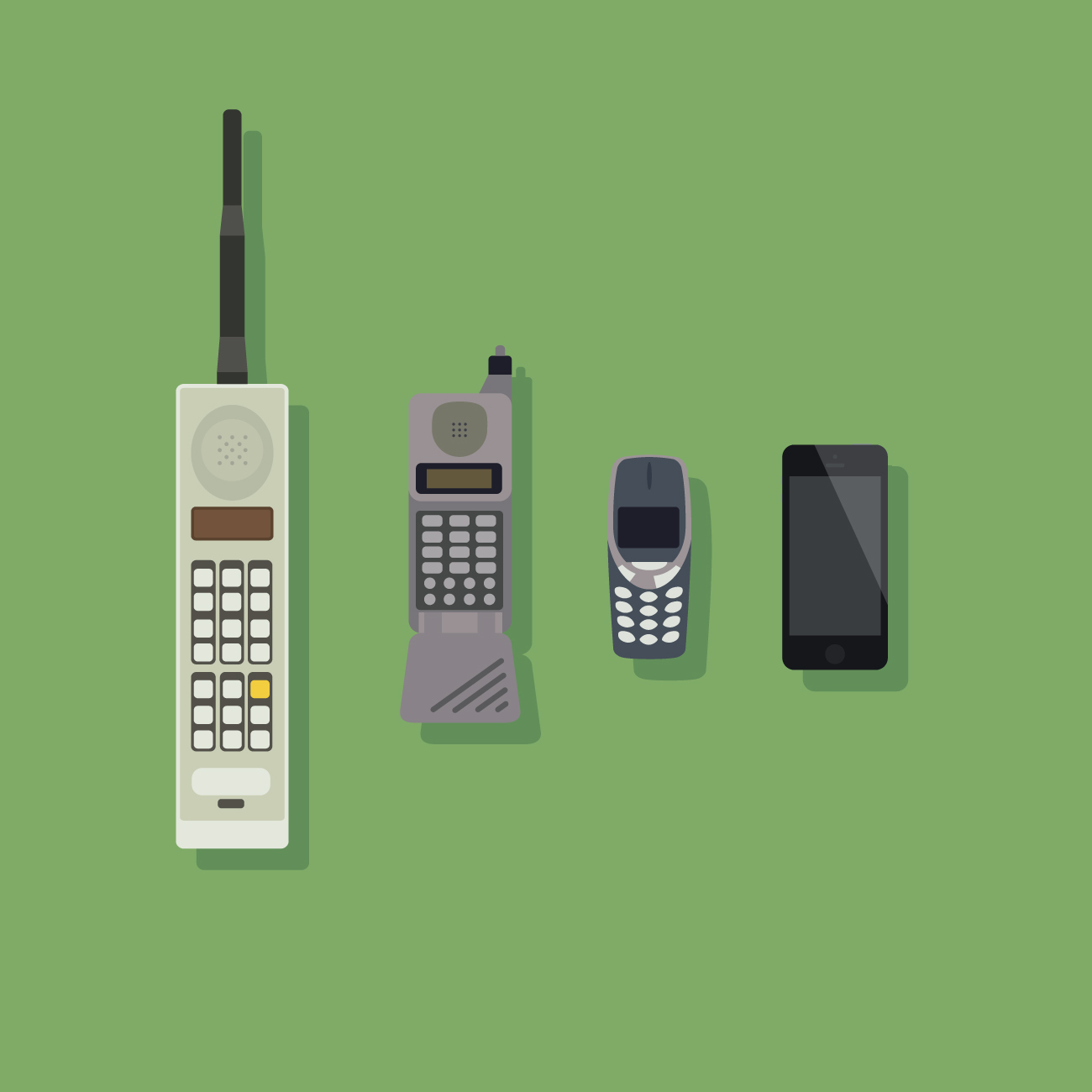
At the end of the 20th century, mobile communications took their first steps, moving from bulky “bricks” to more compact and stylish flip phones. It was a period of rapid technological progress, of searching for the best form factors and of the first mobile giants conquering the market.
1983 saw the arrival of the Motorola DynaTAC 8000X, the first commercially available mobile phone. Despite its considerable size and weight, it became the symbol of a new era, making it possible to stay in touch beyond the walls of the home or office.
The first call: Motorola DynaTAC 8000X
On April 3, 1973, the world heard the first call made from a mobile phone. It was made on the Motorola DynaTAC 8000X, developed by Motorola engineer Martin Cooper. The device, the size and weight of a brick, was a real breakthrough in communications.
The DynaTAC 8000X was the result of a decade of research and development that cost the company about $100 million. It offered up to 30 minutes of talk time and took about 10 hours to fully charge. Despite its high price and limited functionality, the DynaTAC 8000X became a symbol of status and technological progress, paving the way for future generations of mobile devices.
After Motorola, Nokia and Ericsson entered the arena with their own takes on the mobile phone. Competition spurred development, leading to smaller phones and new features. Flip phones and sliders became popular form-factor experiments, combining compactness with a larger keypad and screen.
Nokia and Ericsson
Following Motorola, two European giants, Nokia and Ericsson, entered the mobile technology market. Nokia, a Finnish company that originally made paper and rubber, saw the potential of the new industry and began developing its own mobile phones. Ericsson, a Swedish company with long experience in telecommunications, also joined the race to lead the mobile market.
Both companies made significant contributions to mobile technology, bringing a number of innovative phone models to the world. Competition between Nokia and Ericsson helped lower device prices and expand their features, making mobile communications accessible to a wider audience.
Flip phones and sliders: an era of form-factor experiments
As technology advanced, mobile phone manufacturers began experimenting with the design and form factor of their devices. The era of the “brick” was fading, giving way to more compact and ergonomic models.
Flip phones such as the legendary Motorola RAZR became a symbol of style and functionality. They offered a comfortable keypad and a large screen tucked into a compact body. Sliders, with their slide-out keypads, also became popular, striking a balance between compactness and easy typing. This period was a search for the ideal shape of a mobile phone, one that would meet the demands of both functionality and aesthetics.
From PDAs to touchscreens
The late 1990s and early 2000s were a turning point in the evolution of mobile phones. Ordinary phones that were good only for calls gave way to devices with advanced features: smartphones.
IBM Simon Personal Communicator: the first step towards the smartphone
In 1994, IBM unveiled the Simon Personal Communicator, a device considered one of the first smartphones. The Simon combined the functions of a mobile phone, pager, fax machine and PDA with email. It had a monochrome touchscreen, a stylus for input and a set of preinstalled apps such as a calendar, address book and calculator.
For all its innovation, the Simon Personal Communicator never became widespread because of its high price and limited functionality. Even so, it was an important step towards the modern smartphone, showing the potential of combining communication and computing in one device.
BlackBerry: the king of business communication
In the early 2000s, the Canadian company BlackBerry brought out its smartphones, which quickly became popular with business users. BlackBerry’s key feature was its convenient QWERTY keyboard, which made typing fast and efficient.
BlackBerry smartphones also offered strong data encryption and advanced email features, making them an ideal tool for corporate communications. For several years, BlackBerry remained the leader in the smartphone market, becoming a symbol of status and success in the business world.
Nokia N-Gage: a game console in your pocket
In 2003, Nokia made an ambitious attempt to combine a mobile phone and a game console in a single device: the Nokia N-Gage. This smartphone had an unusual design, with a horizontal screen and buttons like a handheld game console.
The N-Gage let you play 3D games, join online multiplayer games and chat with other players. But for all its innovation, the N-Gage failed to win wide popularity because of its awkward design and limited choice of games. Still, it was an interesting experiment and a forerunner of the gaming smartphones to come.
The touchscreen era: iPhone and Android change the world
2007 was a turning point in the history of smartphones, with the arrival of the Apple iPhone. This revolutionary device, with its large touchscreen, intuitive interface and access to the App Store, forever changed how people thought about mobile devices.
Following Apple, Google introduced the Android operating system, which became an open platform for many smartphone manufacturers. This led to explosive market growth and a huge variety of devices for every taste and budget. The touchscreen era marked a new stage in mobile technology and made smartphones an essential part of our lives.
Apple iPhone: a revolution in interface and user experience
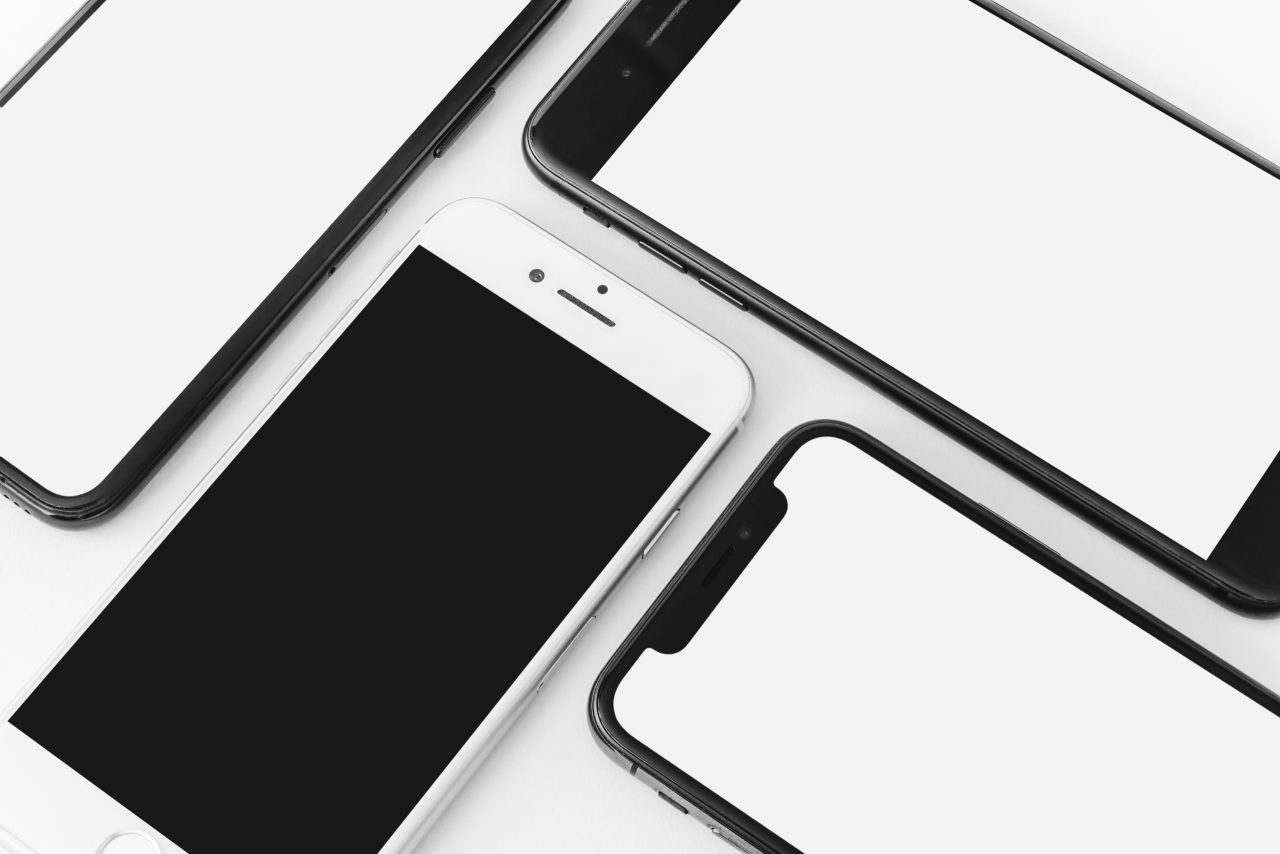
In 2007, Apple unveiled the iPhone, a smartphone that revolutionized the mobile industry. The iPhone stood out from its predecessors not only for its large touchscreen but also for its intuitive interface based on multi-touch gestures.
Doing away with a physical keyboard and focusing on touch control made for a more compact and ergonomic design. The iPhone was also the first smartphone with a full web browser and access to the App Store, opening up a world of mobile entertainment and services.
Android: an open platform for everyone
In response to the iPhone’s growing popularity, Google introduced its Android operating system. Unlike Apple’s closed ecosystem, Android was an open platform that any smartphone manufacturer could use.
This led to a huge variety of Android smartphones differing in design, features and price. The openness of the platform also helped a community of developers grow around it, creating apps and modifications for Android. Thanks to its flexibility and accessibility, Android became the most popular mobile operating system in the world.
Samsung Galaxy S: the iPhone’s main rival
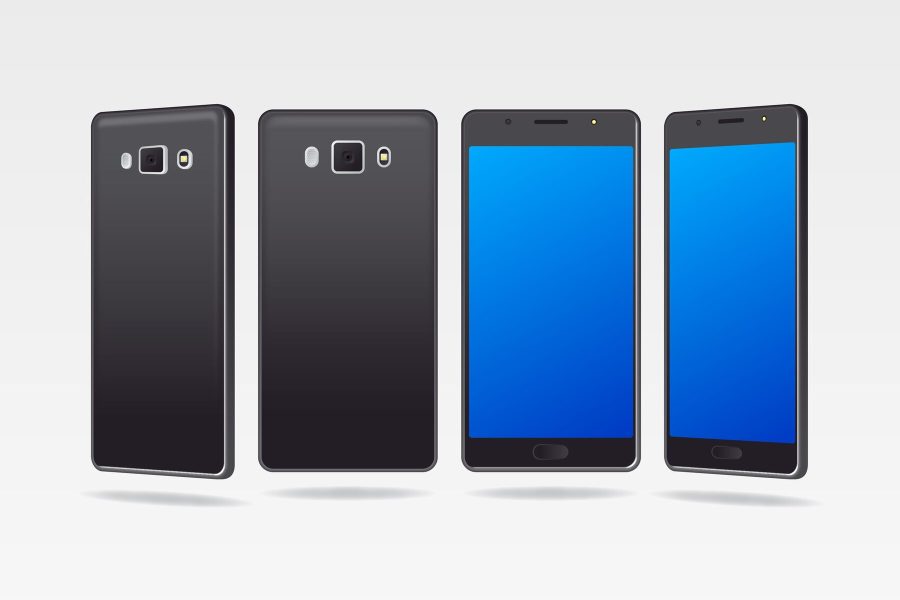
In 2010, Samsung introduced the Galaxy S smartphone, which became one of the iPhone’s main rivals. The Galaxy S ran on Android and offered similar features, such as a large touchscreen, access to an online app store and multimedia support.
That said, the Galaxy S also had several advantages over the iPhone, such as support for microSD memory cards, a removable battery and a lower price. Thanks to a combination of innovative technology, quality design and an aggressive marketing strategy, the Samsung Galaxy S quickly gained popularity and became one of the best-selling smartphones in the world.
The technology of the future, today
Today’s smartphones are not just communication devices but real pocket computers packed with advanced technology. 5G networks deliver ultra-fast data transfer, opening up new possibilities for online gaming, video streaming and cloud services.
Artificial intelligence is used to improve photo quality, optimize app performance and personalize the user experience. Augmented reality blurs the line between the virtual and the real world, letting us interact with digital objects in our real surroundings. Modern smartphones have become an essential part of our lives, bringing us the technology of the future today.
5G, artificial intelligence and augmented reality
Modern smartphones are packed with advanced technologies that seemed like science fiction not long ago. 5G networks deliver ultra-fast data transfer, opening up new possibilities for online gaming, high-definition video streaming and cloud services.
Artificial intelligence is used to improve photo quality, optimize app performance and personalize the user experience. For example, AI algorithms can recognize faces and objects in photos, adjust camera settings automatically and offer relevant recommendations. Augmented reality (AR) lets you interact with digital objects in your real surroundings, creating new possibilities for gaming, education and shopping.
A new chapter in form-factor evolution
In their search for new form factors, smartphone makers turned to flexible displays, which made foldable devices possible. Smartphones with flexible screens offer a unique experience, combining the compactness of a phone with the functionality of a tablet.
Folded, they slip easily into a pocket; unfolded, they offer a large screen for watching videos, playing games and working with documents. Foldable smartphones are a new chapter in the evolution of form factors, opening up new possibilities and use cases.
The text in this post was generated by ClipAI to demonstrate how the program works. On pages without this label, the text is written by humans. Some of the images may be from Freepik.
 Russian
 EN
Andrey ·
A great trip through the history of mobile communications! The article reminded me of my first phone, a Nokia flip phone. So many memories are tied to those phones!
Dmitriy ·
It made me nostalgic for the days when mobile phones were something new and amazing. The author captured the spirit of the era well and covered the key phone models.
Marina ·
I really enjoyed the article. It would be great to see more photos of the first mobile phones.
Olga ·
What an interesting article! I remember those first "bricks": they were real status symbols back then. It's incredible how quickly technology has advanced, and how cell phones have become an integral part of our lives.